
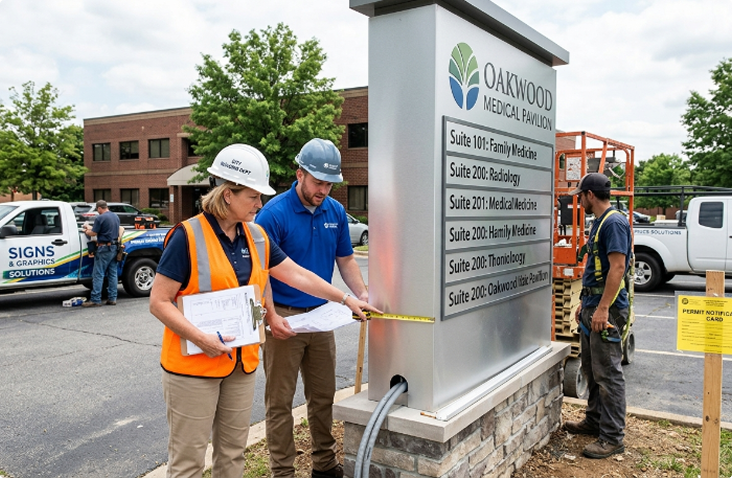
Why Permitting Becomes the Problem
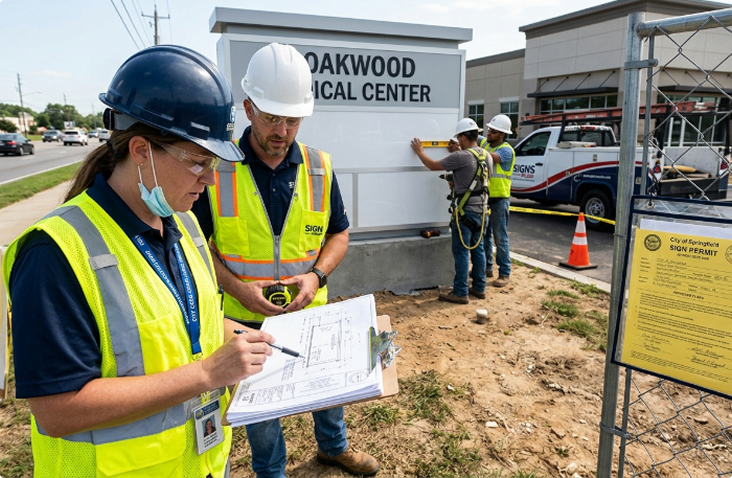
Every municipality in the Atlanta metro has its own ordinance, review process, and definition of what counts as a sign. Add ADA review, HOA approval, and historic district requirements, and a six-week project turns into four months.
Most signage delays do not come from fabrication. They come from a permit application that was missing something nobody flagged on day one. Vision One handles all of it before it becomes a delay.
What We Handle
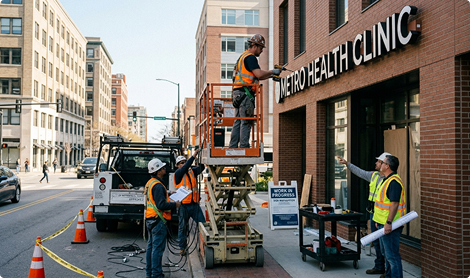
Sign Permit Applications
Drawing packages, municipal submission, and follow-through to approval, including responses to reviewer comments.
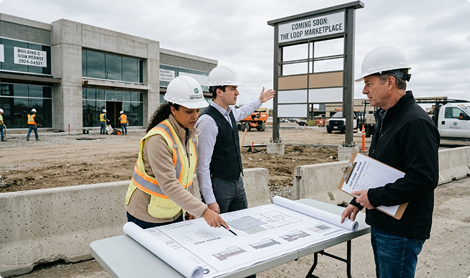
Municipal Code Review
Setbacks, height limits, sign area, illumination, and material restrictions confirmed against the local ordinance before fabrication begins.
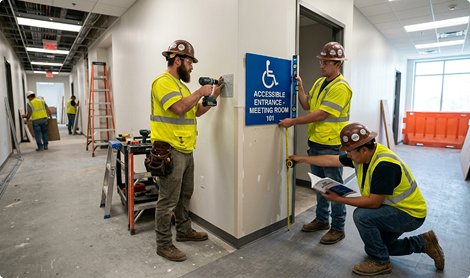
ADA Compliance
Tactile lettering, Braille, mounting heights, contrast, and pictogram standards built into wayfinding and interior signage from the first drawing.
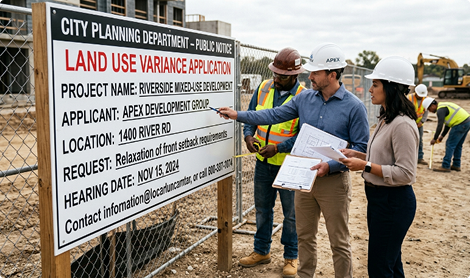
Variance Applications
Preparation, submission, and hearing representation when the project requires more than the ordinance allows.
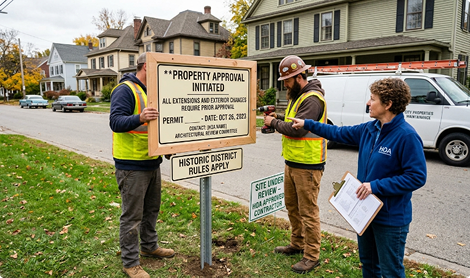
HOA, Historic District, and Property Approval
Submissions managed alongside the municipal permit for projects in master-planned, historic, or HOA-governed locations.
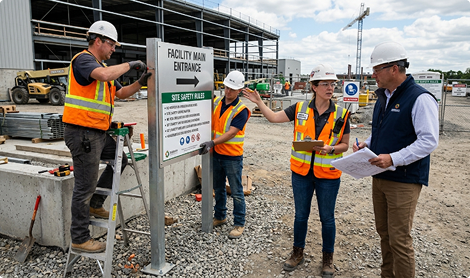
Inspection Coordination
Final inspections, electrical sign-offs, and closeout documentation scheduled and managed to clean project handoff.
Atlanta-Area Jurisdictional Expertise
We have working knowledge of the sign codes across the jurisdictions we serve, including:
- City of Atlanta — Department of City Planning, Office of Buildings
- Cobb County — Marietta, Smyrna, and surrounding areas
- Fulton County — Roswell, Alpharetta, Sandy Springs
- Gwinnett County — Duluth and surrounding municipalities
- Clayton County — Jonesboro and the South Atlanta corridor
- Fayette County — Peachtree City and surrounding communities
For projects outside this list, we research the ordinance and engage the local office directly.

Who Needs Permitting and Compliance Most
General Contractors and Project Managers
- Signage permitting is handled in parallel with the rest of the build, so it does not become the critical-path item that holds up the project.
Commercial Real Estate Developers and Property Managers
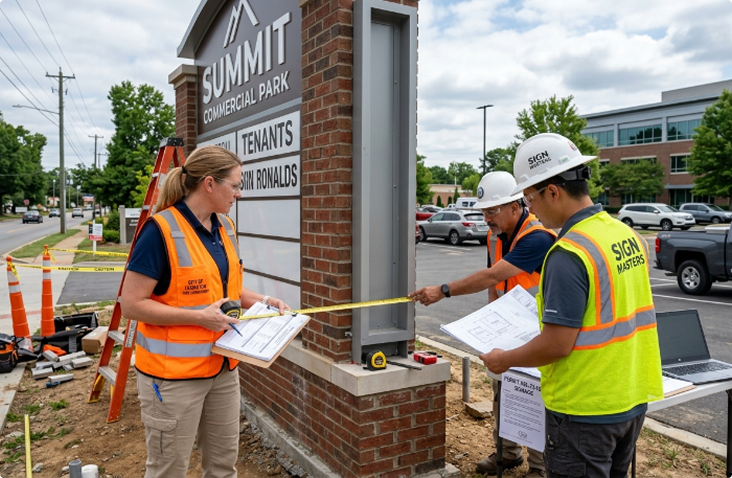
- Coordinated permit work across monument signs, tenant directories, leasing graphics, and building identification for the full property portfolio.
Healthcare Facilities
- ADA-compliant wayfinding and signage documented to code from the first drawing, not corrected after the fact.
Multi-Location Retail and Corporate Brands
- Permit applications coordinated across multiple jurisdictions on overlapping timelines, so the rollout stays on schedule.
Data Center and Industrial Facility Operators
- Secure-site signage, exterior identification, and operational signage handled with the specific permit requirements those facilities carry.
How the Process Works

Why Vision One for Permitting and Compliance
Managed In-House
- Permitting is managed in-house by the Vision One team from start to finish. When specialty expertise is needed, we bring in vetted partners while the project, the timeline, and your single point of contact stay with us.
Designed Around the Ordinance
- Code review happens before design finalization, so the first submission is the right submission.
Built for Multi-Jurisdiction Rollouts
- Projects spanning multiple cities or counties are coordinated so the entire portfolio moves forward in parallel.
Frequently Asked Questions
Standard timelines run two to six weeks from submission, depending on the jurisdiction. Variances, ADA review, and historic district approvals add time. We confirm a realistic timeline at the start of every project.