
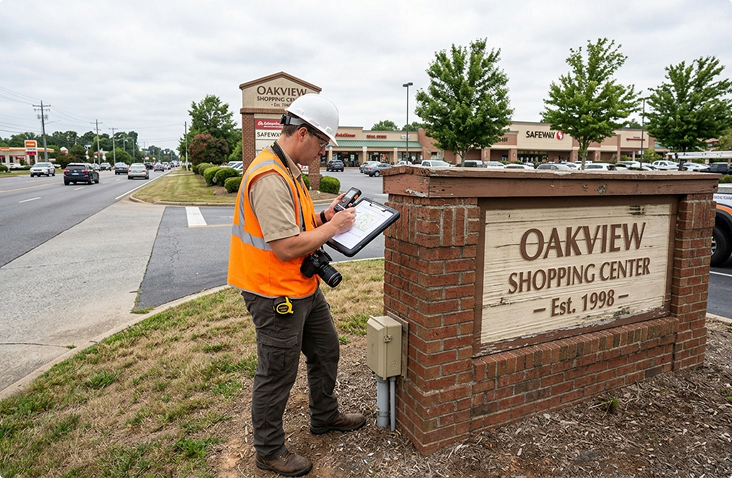
Why Site Surveys Prevent Most Project Surprises
Most signage problems are not design problems or fabrication problems. They are site problems that nobody caught early. Wrong dimensions. Hidden conduit. Setback that does not match the ordinance. Substrate that cannot hold the mounting hardware. Site conditions that make crane access impossible.
A proper site survey catches all of that before the project starts, when it is still cheap to adjust.
What Survey and Site Assessment Covers
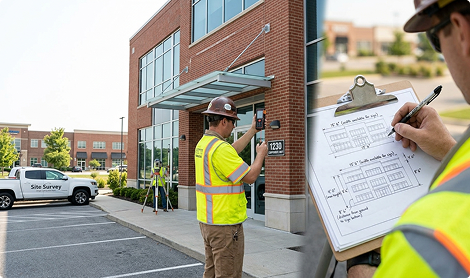
Dimensional Survey
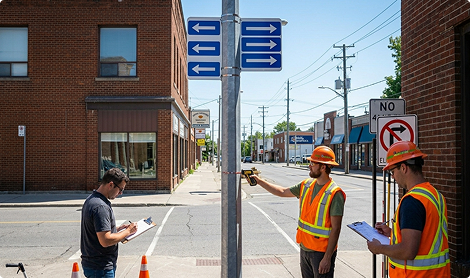
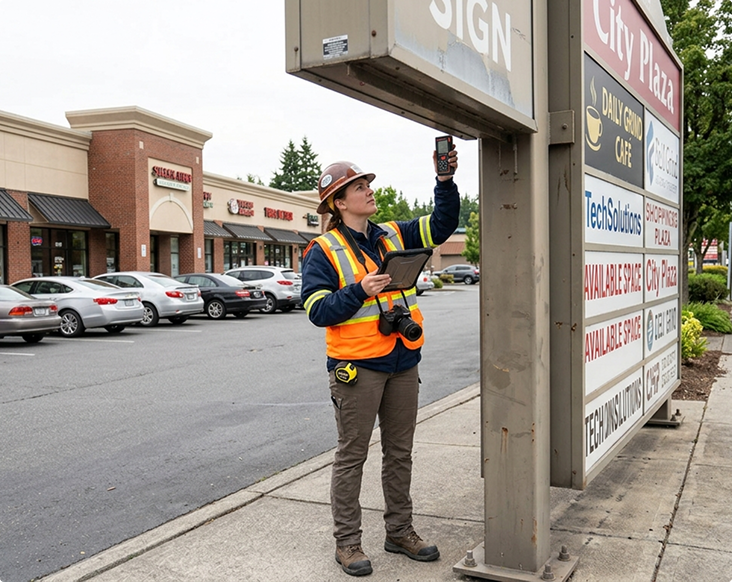
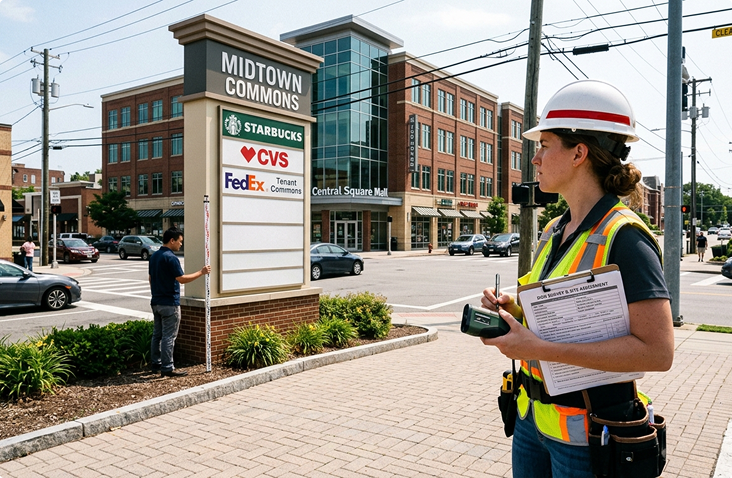
Precise measurements of the building face, signage area, mounting surface, and surrounding architectural features. Documented to the standard required for fabrication and permitting.
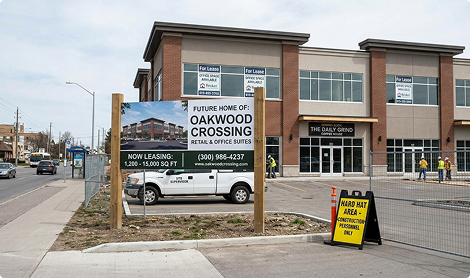
Site Photography
Comprehensive photographic documentation of the site, including the proposed sign location, surrounding context, traffic and sight-line conditions, and any existing signage on the property.
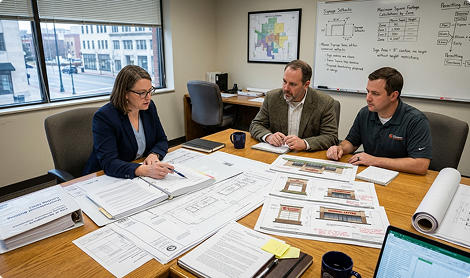
Code and Ordinance Review
Review of the applicable sign ordinance for the location, including allowed sign area, setbacks, heights, illumination rules, and any special district requirements. See our Permitting & Compliance service page for the full permit scope.
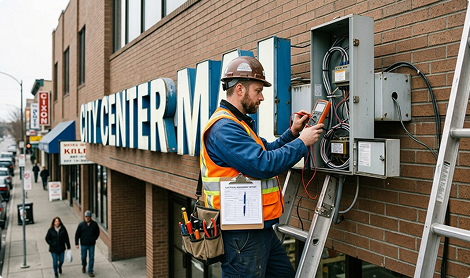
Electrical Assessment
Documentation of existing electrical service, available capacity, conduit routes, and what will be required for illuminated signage. Coordinated with our Lighting & Electrical team for power planning.
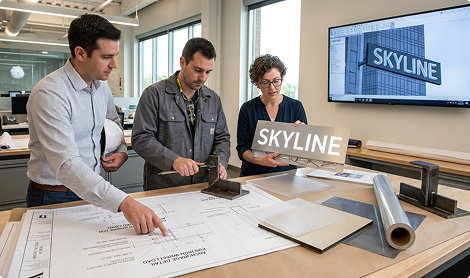
Substrate and Structural Review
Assessment of the mounting surface, including substrate type, structural capacity for the proposed sign, and any conditions that will affect mounting hardware selection.
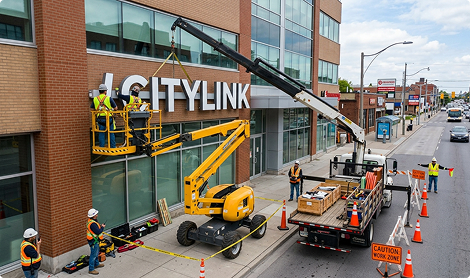
Access and Install Logistics
Documentation of crane and lift access, lay-down area, restricted hours, and any site conditions that will affect the install plan.
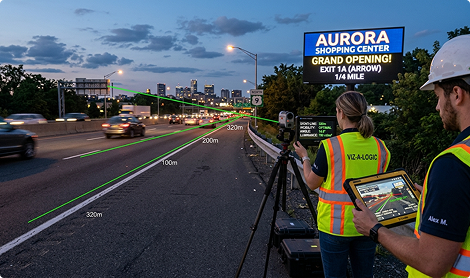
Sight Line and Visibility Analysis
Documentation of viewing angles, traffic speeds, surrounding obstructions, and competing signage to confirm that the proposed sign will perform from the intended viewing positions.
Survey Documentation
A full site survey package delivered as part of the project, including dimensions, photos, ordinance summary, electrical and structural notes, and recommended next steps.
When a Site Survey Is Required
New Sign Projects
Every new sign installation starts with a site survey, either as a standalone scoping engagement or as the first phase of a complete sign project.
Property Acquisitions
Buyers and developers evaluating a property's signage potential, including ordinance constraints, existing signage condition, and visibility from key approaches.
Multi-Location Brand Rollouts
Surveys conducted at each proposed location to confirm site-specific feasibility, identify variations from the standard sign program, and document conditions across the portfolio.
Sign Refresh and Refurbishment
Assessment of existing signage to determine refurbishment scope, identify required electrical or structural work, and quote refresh projects accurately.
Sign Variance and Special Use Applications
Documentation supporting variance applications and special use permits, including site photography, dimensional analysis, and contextual documentation.
Who Uses Vision One Site Survey Services

Property Owners and Developers
Feasibility surveys for proposed signage on owned or prospective properties, often performed before lease finalization or acquisition.

General Contractors and Project Managers
Site documentation supporting signage specifications in construction documents.

Real Estate Brokers and Leasing Agents
Tenant-facing signage feasibility on commercial properties as part of leasing conversations.

Multi-Location Brand Teams
Multi-site surveys supporting brand rollout planning across multiple Atlanta-area locations.

Architects and Design Teams
Site-specific documentation supporting signage design integrated with architectural plans.
Why Vision One for Site Surveys
Surveyed by People Who Build Signs
Site surveys are conducted by team members who know what fabrication and install actually require, not by surveyors documenting generic information that may or may not be useful.
Documented for Project Use
Survey output is delivered in a format ready to feed directly into design, permitting, and fabrication, not as raw notes that need additional translation.
Ordinance Knowledge Built In
Atlanta-area sign ordinances are not all the same. We know the rules in each jurisdiction we cover, so the survey includes accurate ordinance context, not a generic code reference.
Frequently Asked Questions
Yes. Standalone site surveys are available for property evaluations, feasibility studies, and pre-project scoping. Survey output transfers cleanly into a full project later if you decide to proceed.